Case Study
FARIA: READING COMPANION
Faria keeps the act of looking something up inside the act of reading: ask aloud, hear the meaning in context, and return later to the words and lines that stayed with you.

Role
Design and engineering, solo
Timeline
July 2026 to present
Platform
iOS 26, iPhone
Status
LIVE - 1.0
What took a pen, a bookmark, and a browser tab now takes a question.
01_ The premise
Keep your eyes on the page
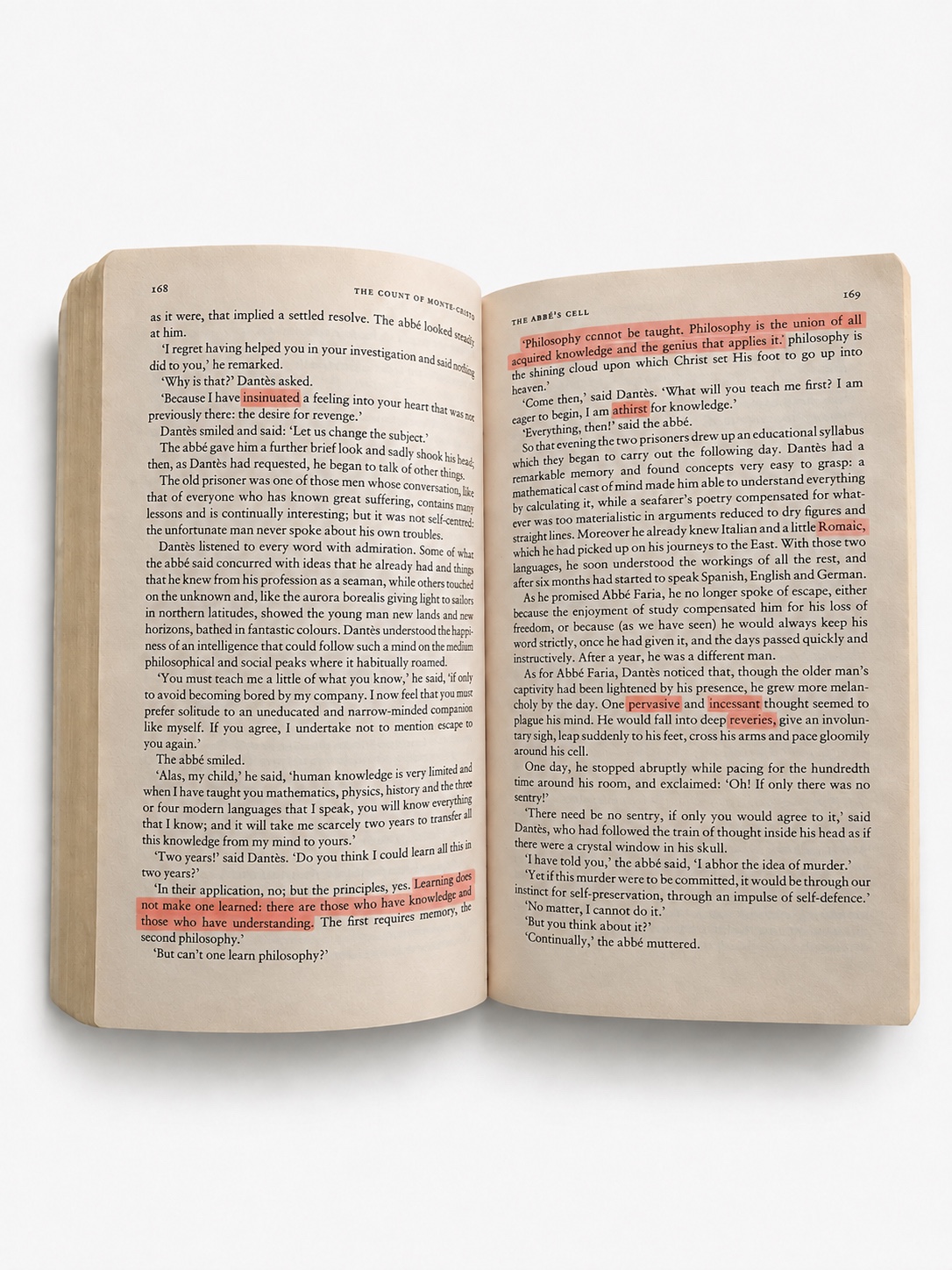
Faria began with a simple desire: a way to look up a definition without taking your eyes off the page. A word can be asked aloud as you reach it, and the meaning returns in the context of the book you are holding, without opening a browser or surrendering the moment to everything else waiting on your phone.
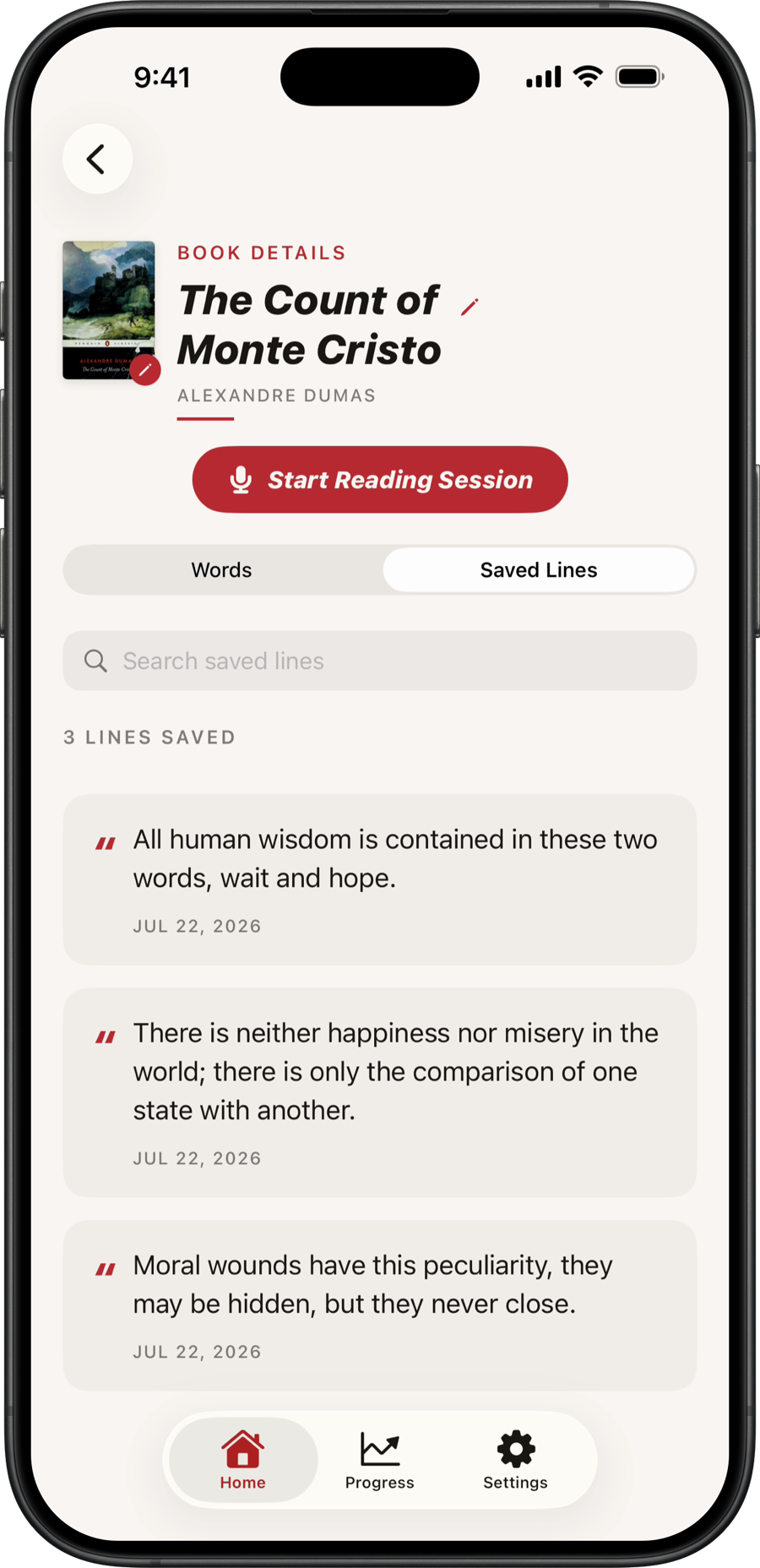
What might otherwise disappear is kept close to the book: unfamiliar words to review later, and lines worth remembering after the cover is closed. The screen is not a destination so much as a quiet record of the reading itself — present when needed, then willing to recede.
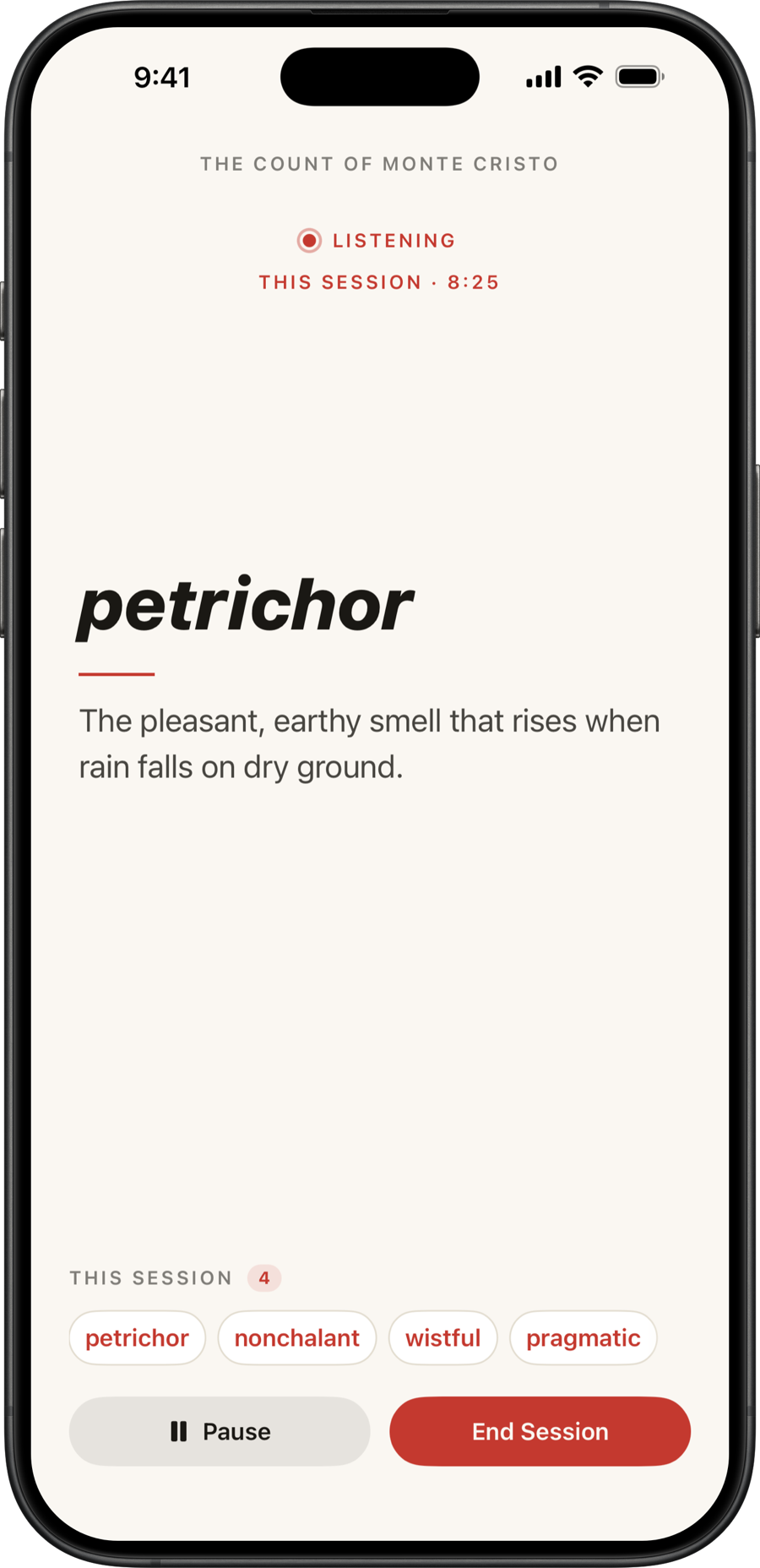
- 01ListenThe mic runs for the length of the session and for nothing else. No wake word, no always-on.
- 02CatchIt sorts what you say into a question, a correction, a line worth keeping, or a word on its own.
- 03HoldThe mic pauses before the answer plays, so the app can never hear itself and define its own voice.
- 04SpeakThe answer comes back aloud, written for the sense that fits the book in your hands.
- 05ResumeThe mic reopens on its own. You have not moved.
02_ The model
Teaching it to hear a reader
An unfamiliar word is often one you have never said aloud. Add a quiet room, a half-whisper, and the uneven rhythm of thought moving through a book, and ordinary speech recognition begins making very confident guesses.
Automatic endpoint detection was removed because it kept freezing half-heard words too early. The classifier also had to learn that a sigh is not a question and a hesitant “hmm” is not a lookup. Definitions are written for the book rather than lifted from a dictionary, because “charged” in a physics text and “charged” in Dumas may share an entry while carrying entirely different weight on the page.
When Faria gets something wrong, you can correct it aloud. The mistaken entry disappears, the right one takes its place, and an anonymous correction helps the next attempt. The book title is deliberately left out of that data; beside a timestamp, a title can reveal far more about a reader than it first appears to.
03_ The camera
A library from one photo of a shelf
The first friction appears before the reading begins: telling an app what is already on your shelf. Adding every title one at a time turns a personal library into a form to complete, so Faria builds it from a single photograph instead.
The image is divided into overlapping close-ups before anything is sent, preserving the small text a vision model might otherwise blur past. It first records what can actually be seen on each spine, then works out which book it belongs to. Mistakes become legible rather than mysterious, and the occasional wrong title remains easy to remove.
04_ The habit
What makes it open again tomorrow
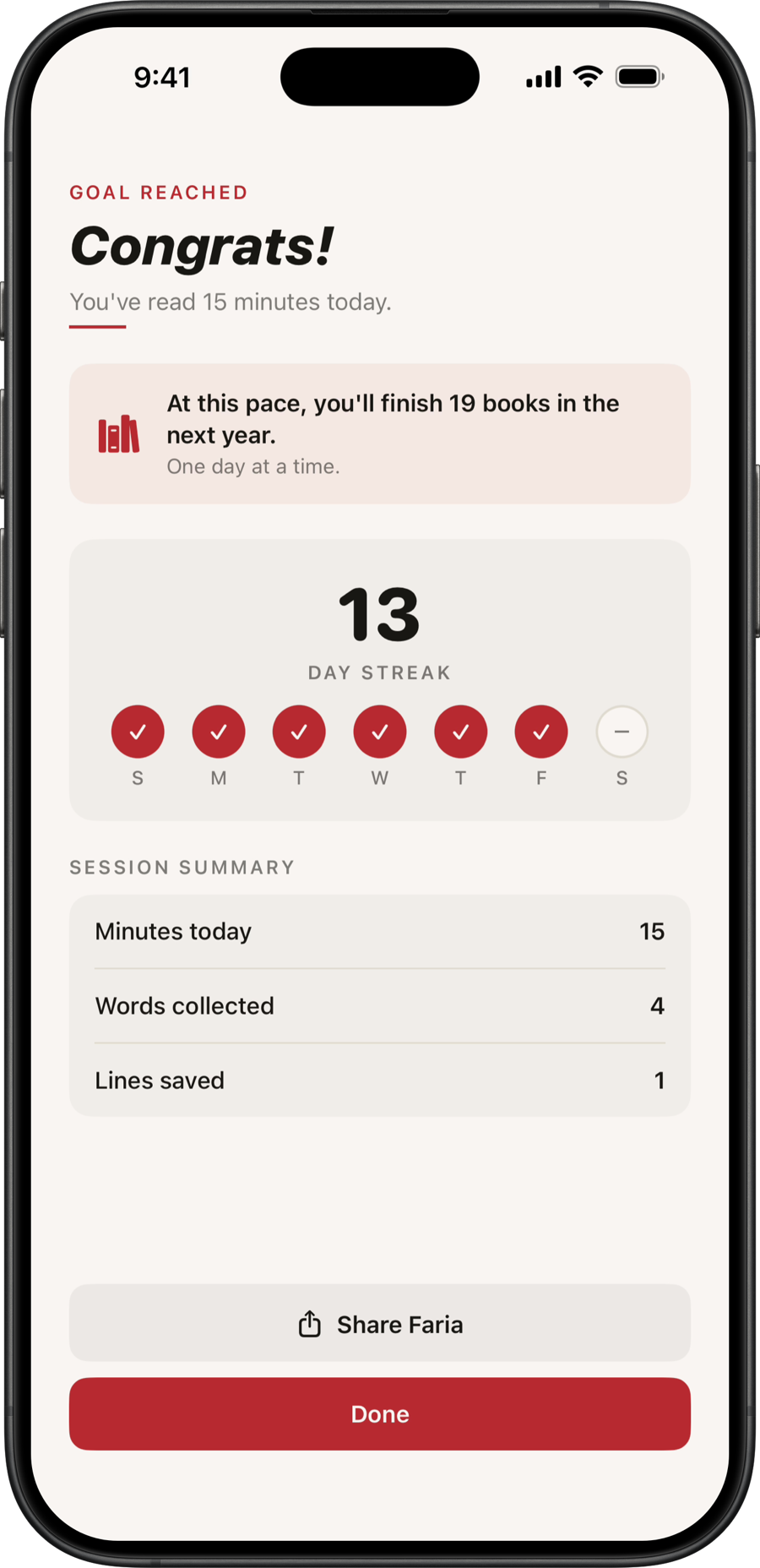
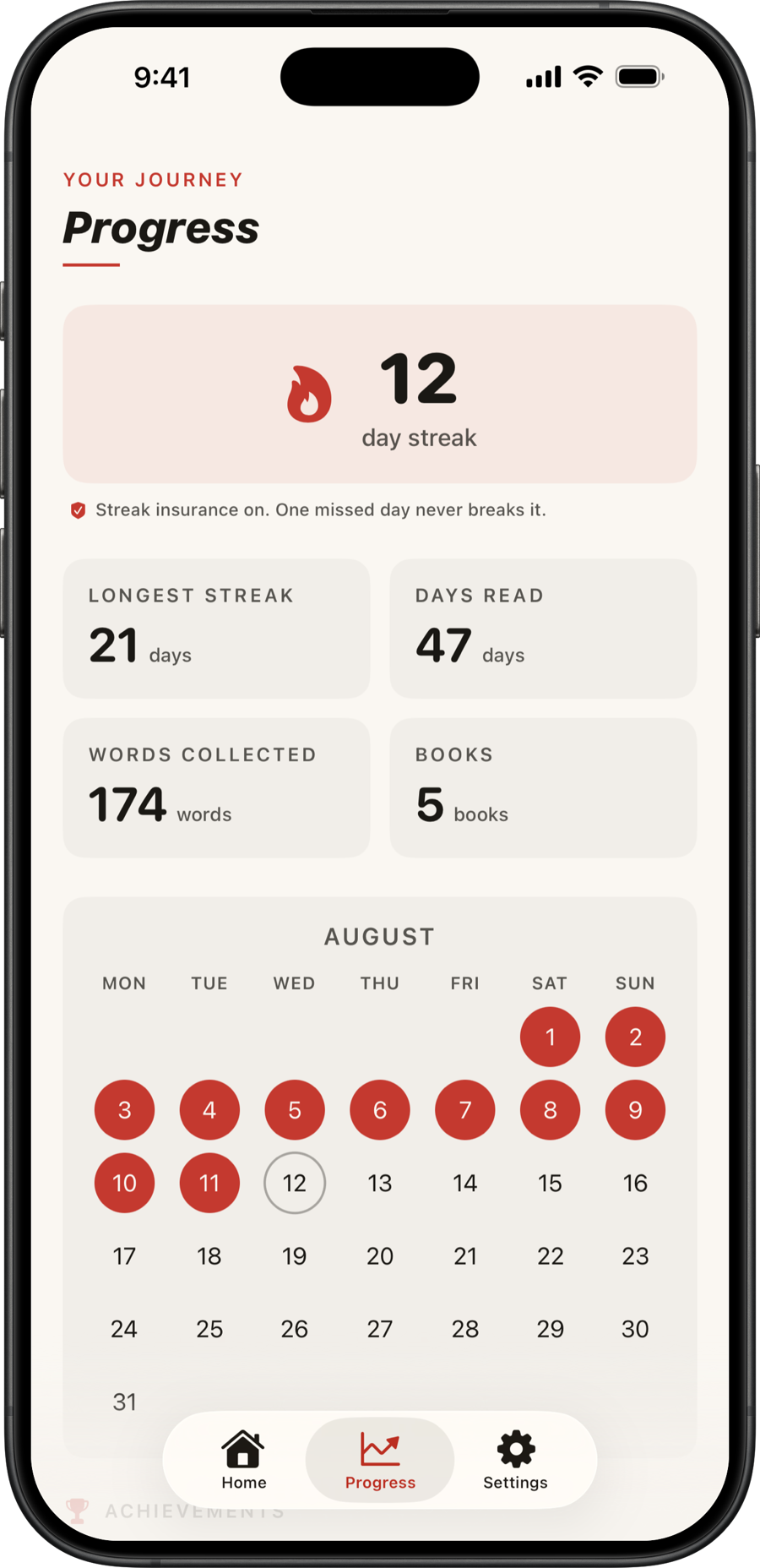
Once a definition can arrive without breaking the spell, the harder question is whether the book opens again tomorrow. A daily goal, a reminder at the hour you tend to read, saved passages, streaks, and small milestones allow the time to accumulate without turning reading into homework. The day rolls over at four in the morning rather than midnight, because a reader in bed should not lose a streak simply for crossing into tomorrow.
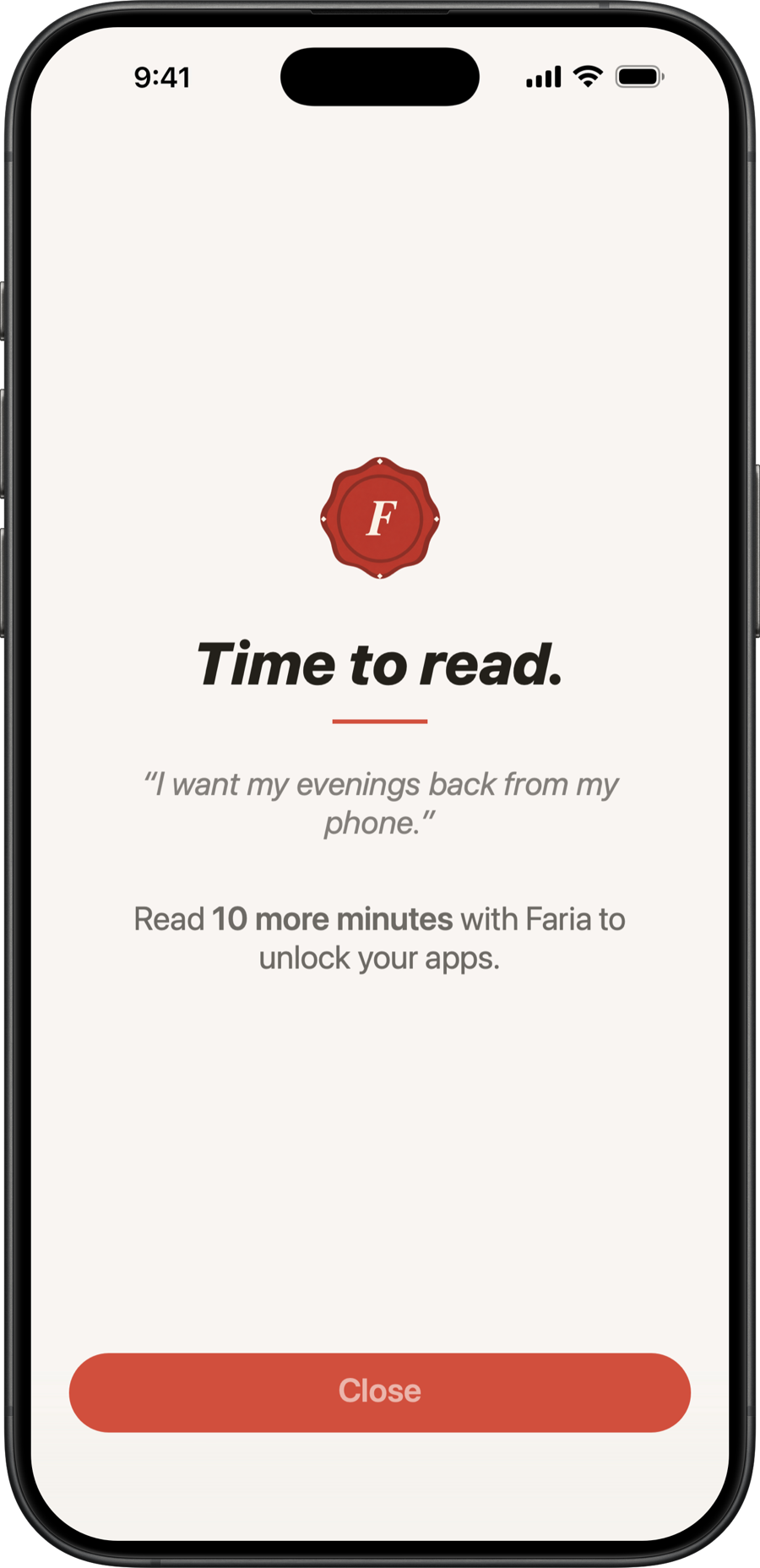
The more pointed feature begins with a familiar temptation. Choose the apps most likely to take the evening from you and they can remain closed until the day’s reading is complete. It is optional and off by default; when enabled, the thing that usually replaces the book becomes the thing the book unlocks.
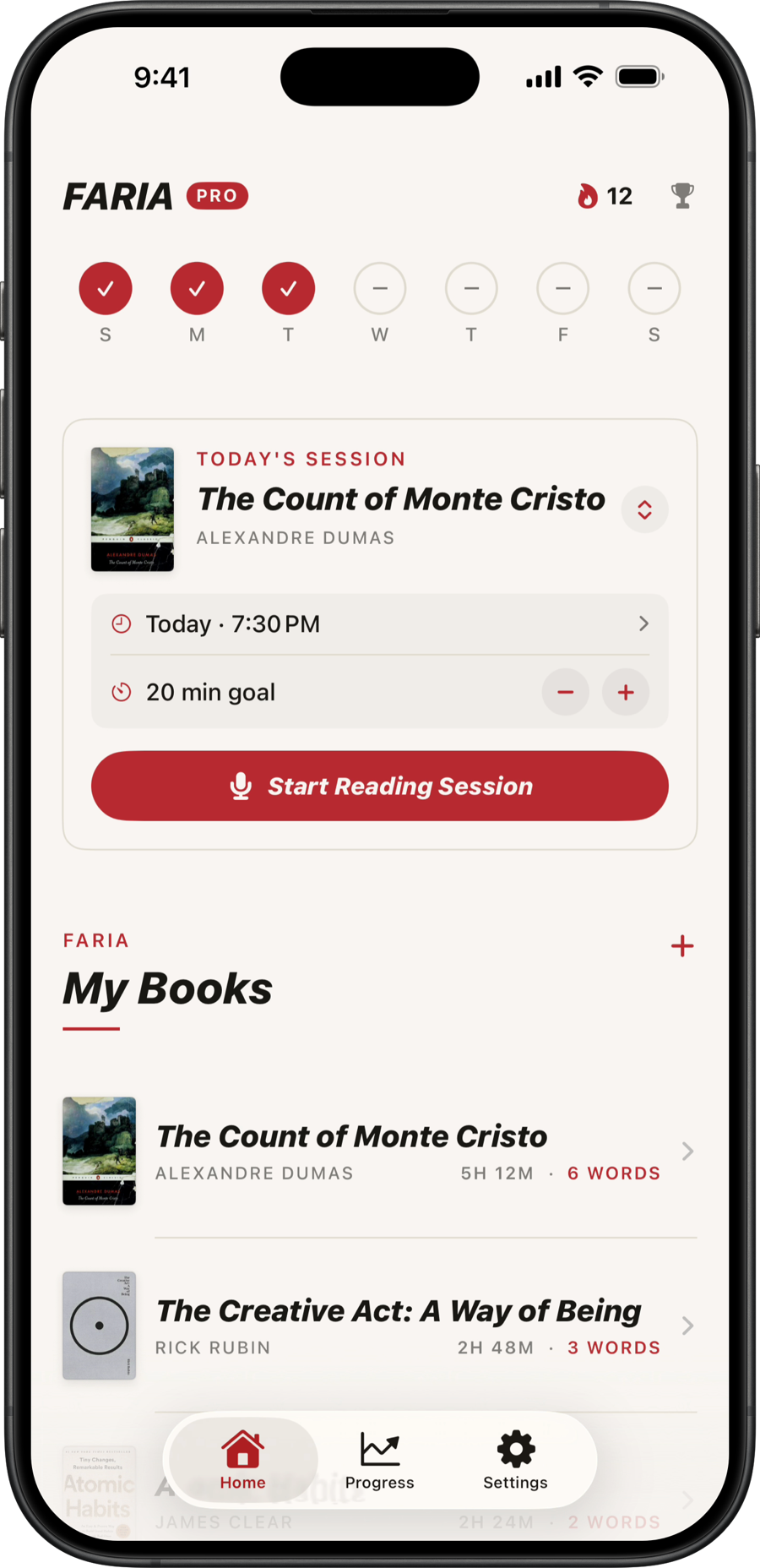
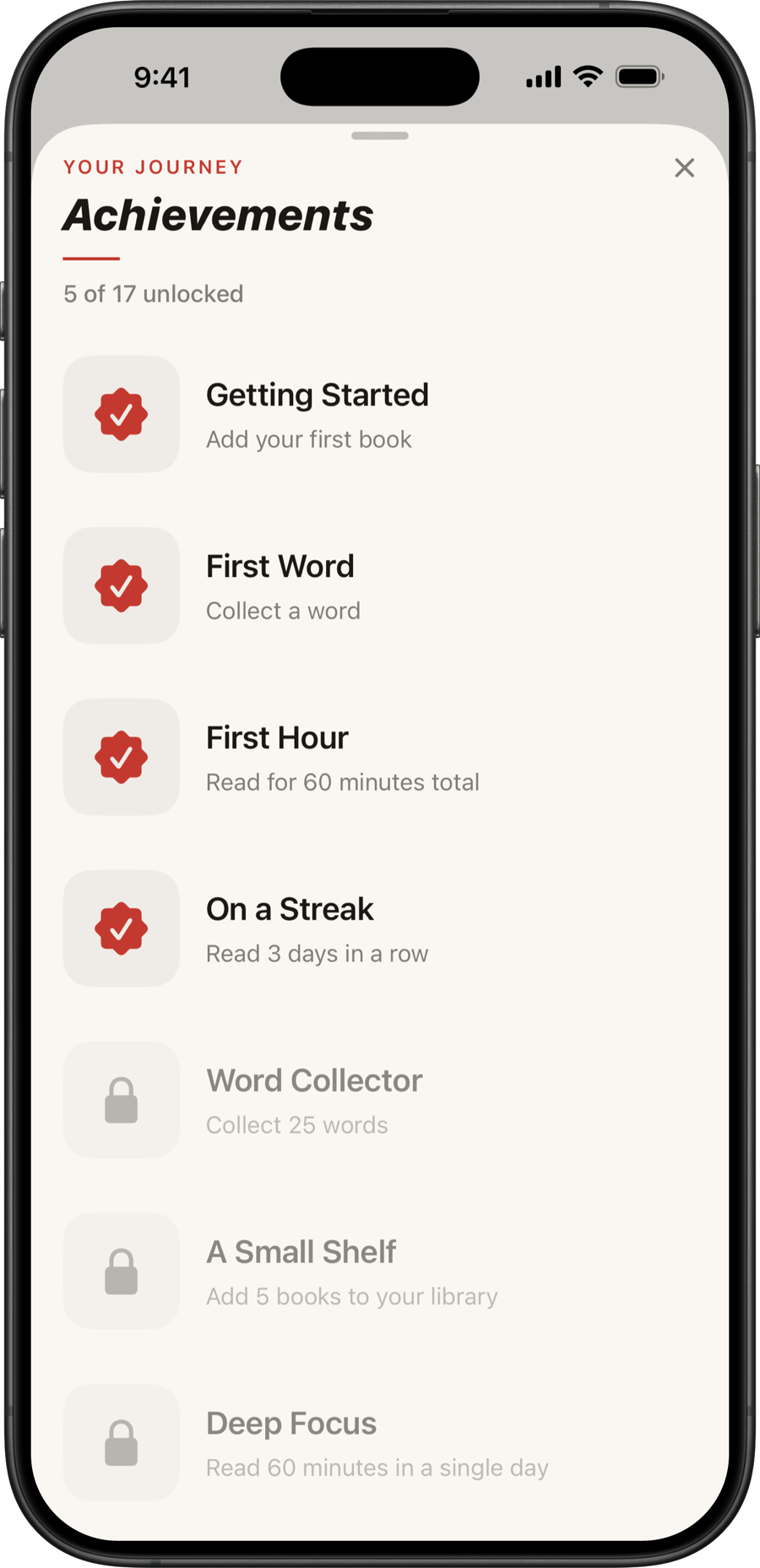
The next session is always one tap away.