05_
HANK DOESN’T FIND OUT
01_ THE EXPERIMENT
02_ ABOUT THE EXPERIMENT
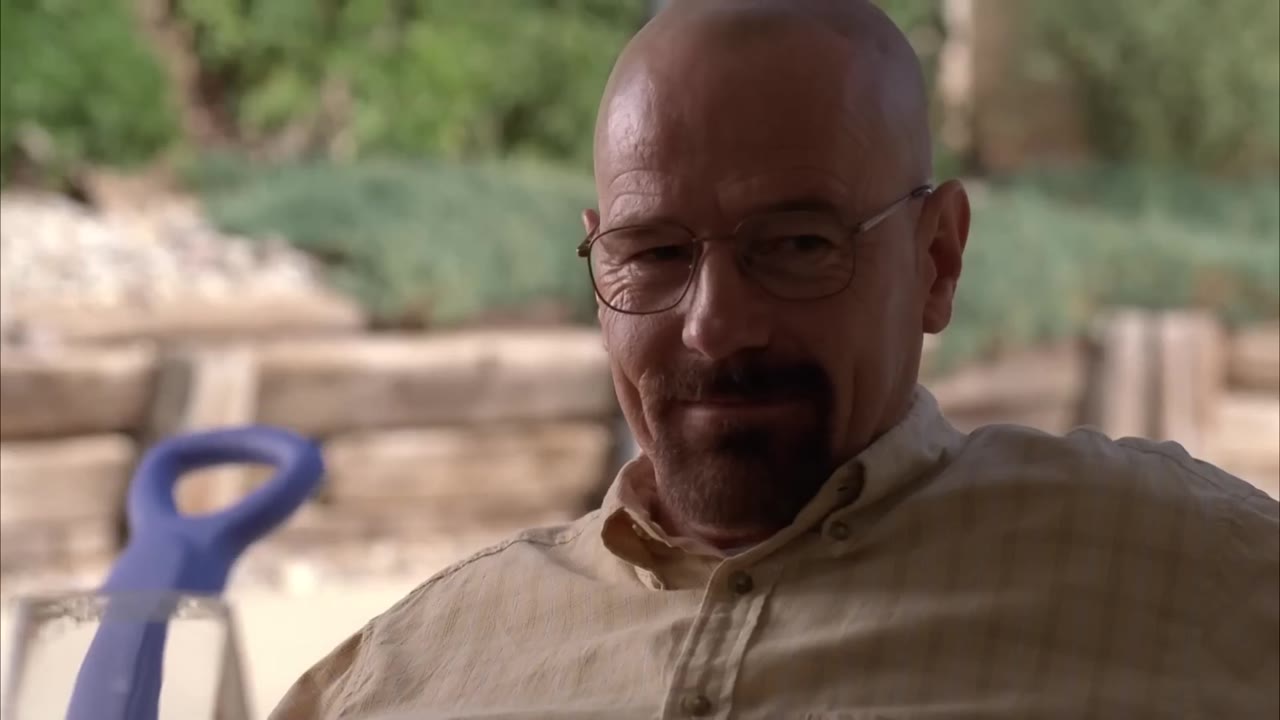
After Séjour en Italie, I wanted to keep playing with video models and try a scene from a show. This one is a fun experiment with Breaking Bad: Hank goes into the bathroom, comes back out, and doesn’t find out.
There are still errors in it. I am still learning how to get more out of each run without overspending on clips, so I left it here for now. But it makes me laugh, and I think it is a great first attempt to build on.
That is an approach I take to my work too. I like making something, seeing where it works and where it falls apart, and learning enough from that first attempt to make the next one better. There is plenty I want to improve here, and having something to watch makes it much easier to see what to try next.
03_ HOW IT WAS MADE
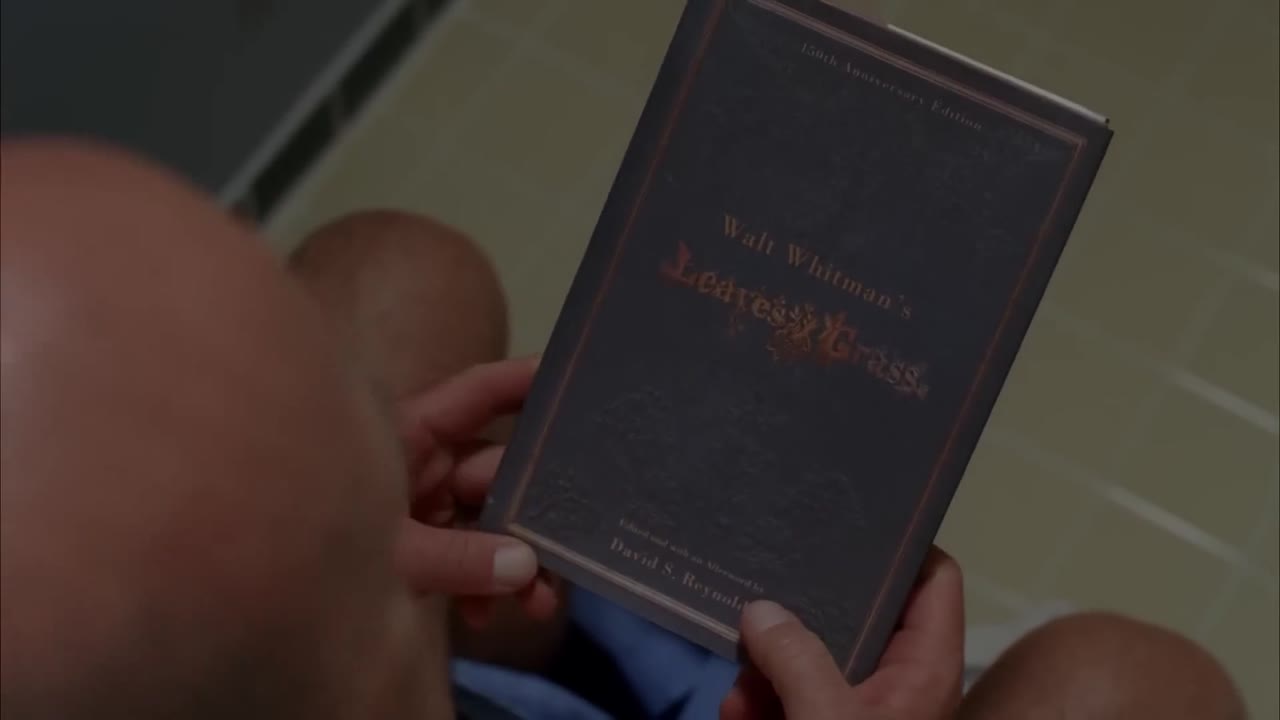
The scene is the last one of Gliding Over All. Hank sits down, finds Leaves of Grass on the tank, reads the inscription, and the episode cuts to black. The version above is 87 seconds long and about twenty of them are generated. Everything else is the broadcast footage, untouched, including the whole reach for the book.
I set one rule before rendering anything: no shot gets described from scratch. Every generated shot starts from the real footage. The plate goes into the model as the source to edit, frames from the same scene are pinned as keyframes, and the plate’s own sound goes in beside it, so the prompt only has to say what changes. Most of the work turned out to be choosing which few seconds of footage to hand the model, and moving that choice when a take came back wrong.
The cut and the plan
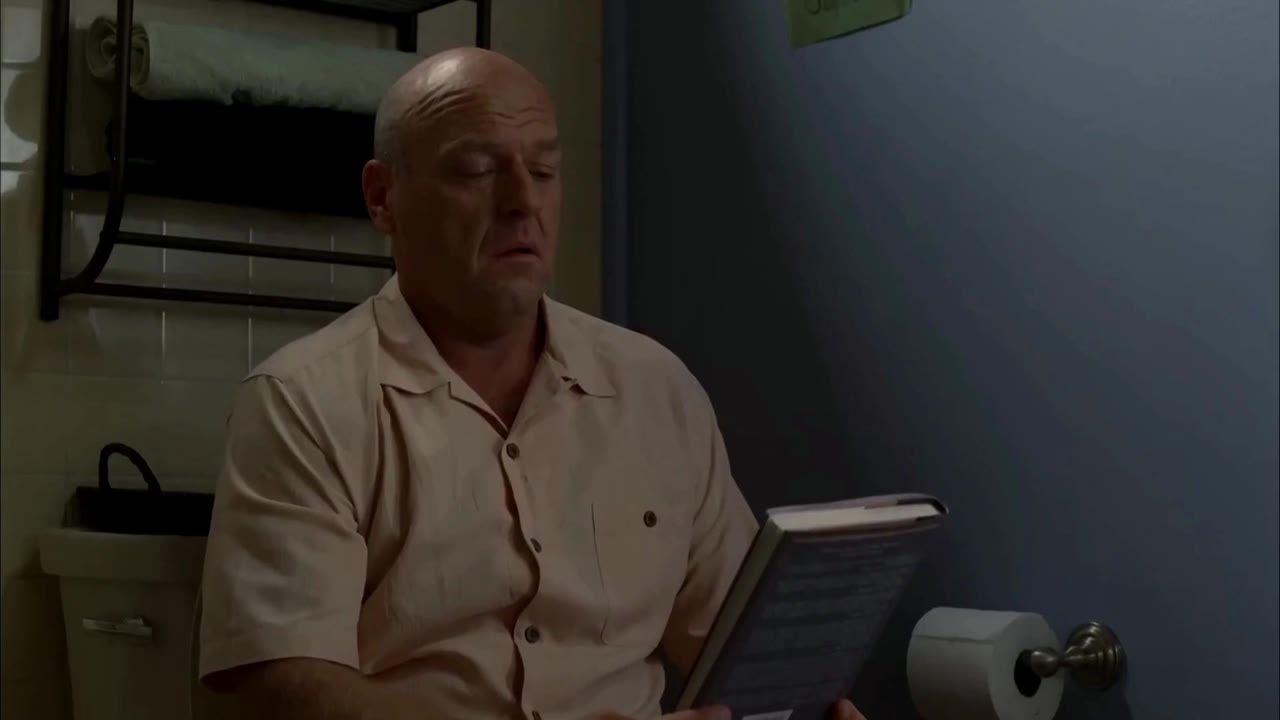
I cut the 42 seconds from the bathroom door to the book, 3:22 to 4:04 of the scene, and went through it at half-second steps to find the cut points. The one that mattered is at 4:04.54: the show cuts from the book insert to a front view of Hank with the book still closed in his hands. That frame is a free opening frame. If the generated shot starts exactly there, the plate can play real all the way through the insert and the model only has to put the book down.
That left three shots to generate: the book going back, the exit, and Hank coming back out to the table. Everything between them stays real. The frames below are the ones the shots were built from, each with the job it was given.
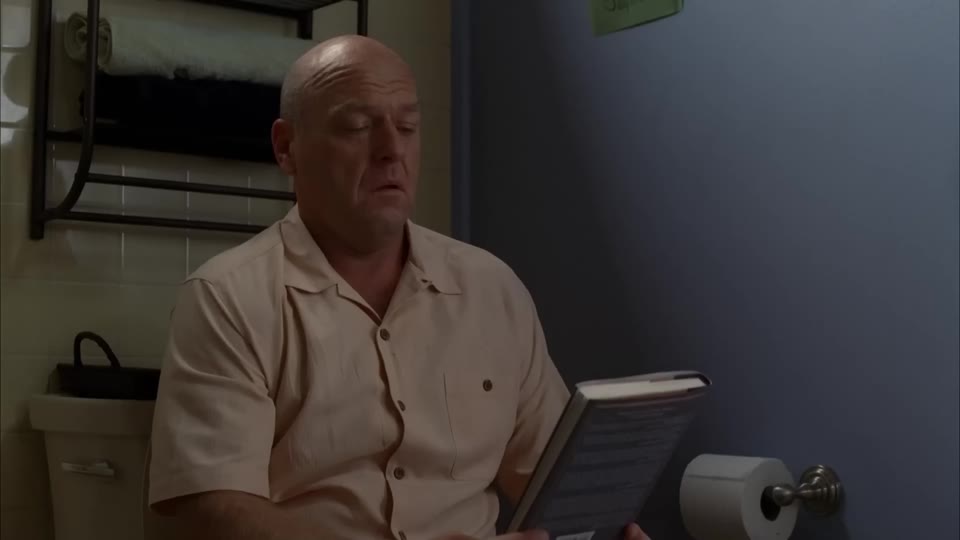
Opening frame · Shot 1
4:04.54, the show’s own cut into the front view
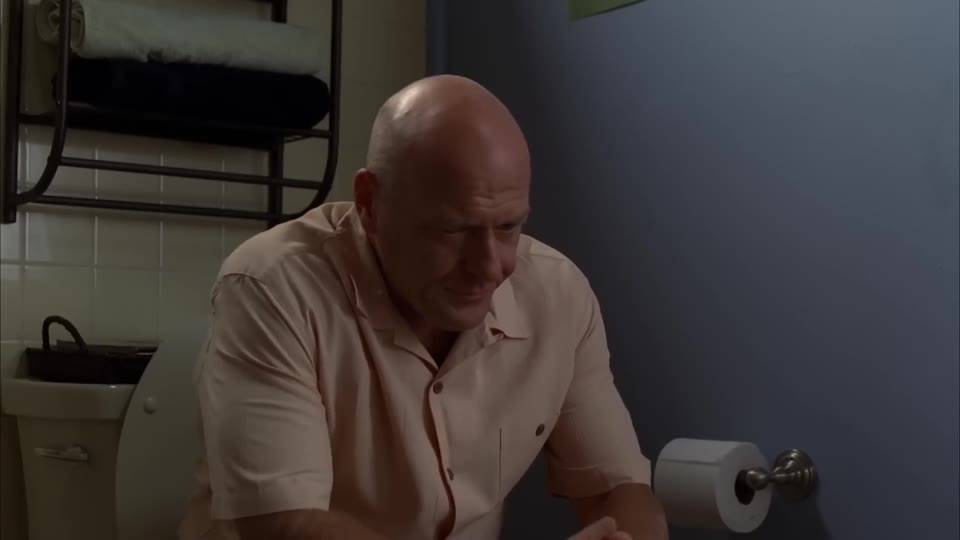
End posture · Shot 1
the same seat, nothing in his hands
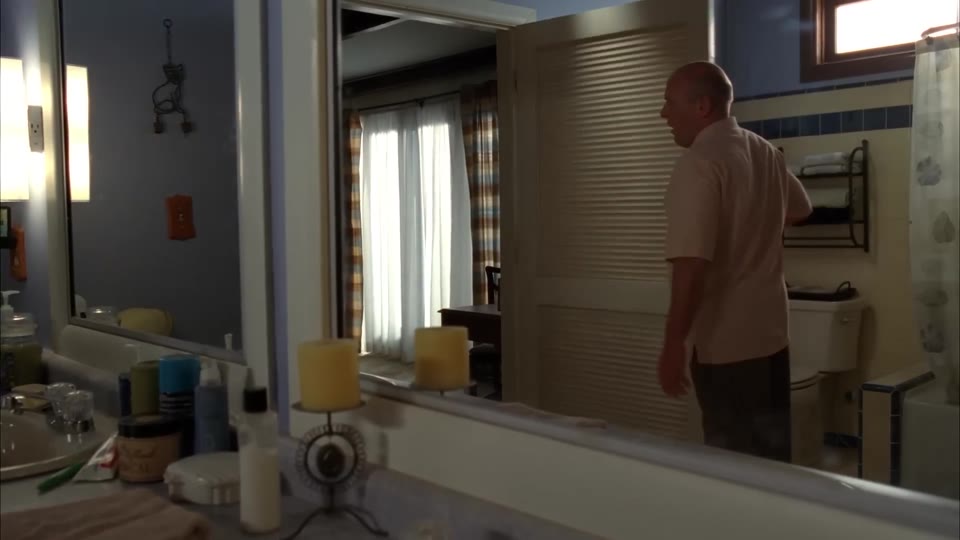
Keyframe · Shot 2
the doorway, from the plate’s entrance
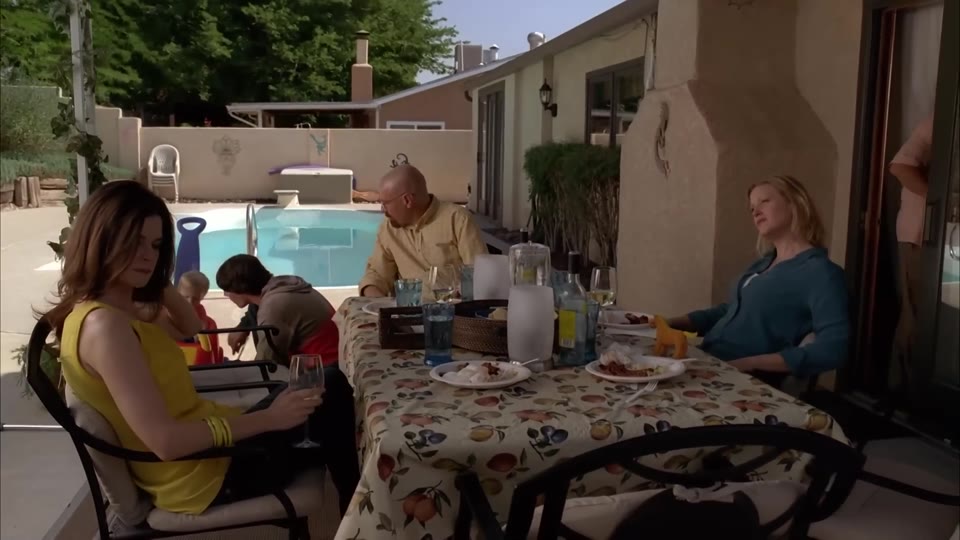
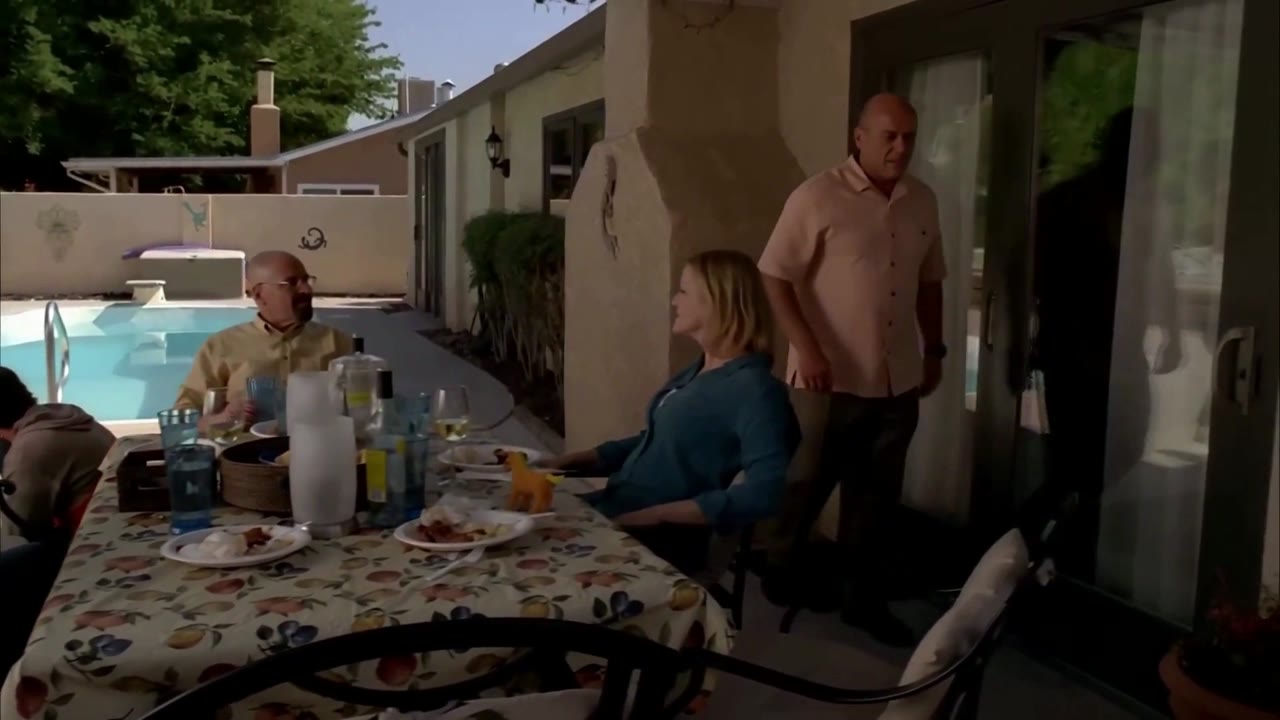
Opening frame · Shot 3
Walt at the table, Hank’s chair empty
The studio
All of it ran through the studio I built around MiniMax’s reference-to-video API the week H3 came out. A shot is a timeline entry with a prompt, a length, and a shelf of references, each one given a job: a video is an edit source or a motion reference, an image is an edited keyframe or a subject, audio is copied or referenced. The studio writes the model’s six-section grammar from a plain draft, checks the prompt against the attached slots, and sends the same content array to whichever provider is selected.
It started on MiniMax’s own API. I added H3 Max through fal, Seedance 2.0 and Gemini Omni Flash as providers so a shot could be tried on another model without rebuilding it, and a library that keeps every take with the prompt that made it, which is how the rejected takes below survived. This is shot 1 as it was sent: the plate as the edit source, five frames, the plate’s sound, and the prompt.
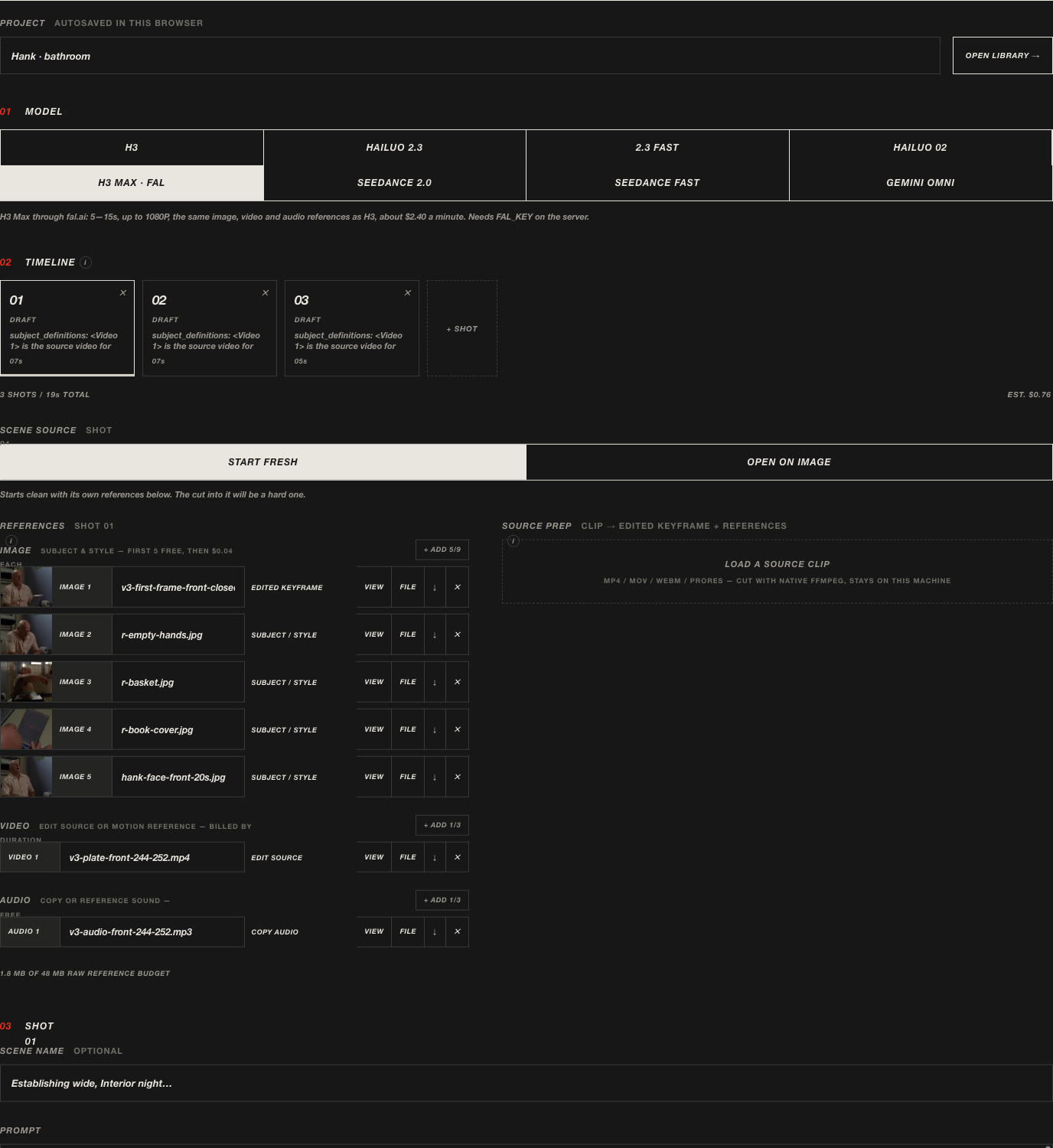
The studio, with the three shots on the timeline and shot 1 open. H3 Max on fal, 1080P. Each reference carries the job it was given: Image 1 is the edited keyframe, the video is the edit source, the audio is copied. The estimate is shown before anything is sent.


Eight models across three providers behind one picker, so the same shot can be sent elsewhere without rebuilding it. The prompt field holds the model’s own six-section grammar; the studio writes it from a plain draft and warns when an attached reference is never given a job.
Shot 1 · The book goes back
The first draft described the shot in text with a first and last frame, and I threw it out before rendering. That is not how these models are strong; the references are the point. So the plate went in as the edit source and the plate’s own frames as keyframes.
Take 1 came back with the camera panning around to his face, because I had pinned the front-view frame as a closing keyframe and the model got there with a camera move. I wanted a cut, not a pan. Take 2 I rejected for a reading error of my own: the stack on the tank is two magazines on top of the book, and he sets the magazines aside and keeps the book; my prompt had it backwards. The fix for both was to make the edit smaller. The real footage already runs through the insert and the cut into the front view, so the generated shot opens on that cut’s first frame, closed book in hand, and does one thing: puts it back. First take at that scope, used as is.
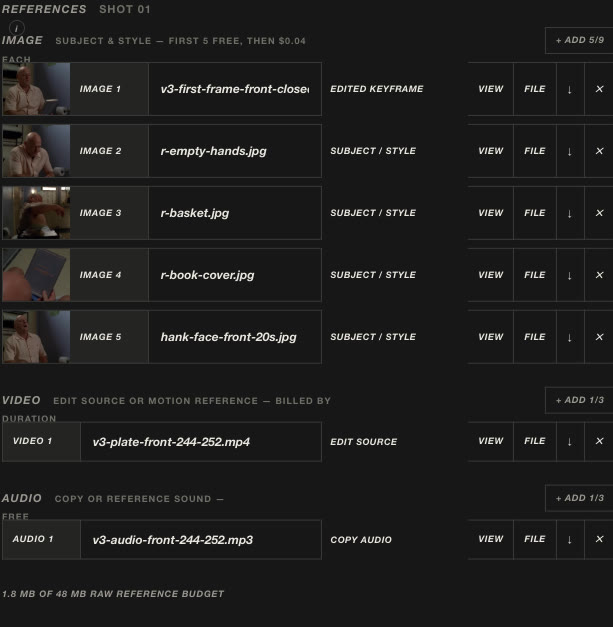
Left, shot 1 as sent: the references with their roles. Right, its edit source: the show’s own front view from the cut at 4:04.54, the seven seconds the model was told to change.
Picture 1 · Edited keyframe
the exact opening frame
Picture 2 · Subject
the posture it ends on
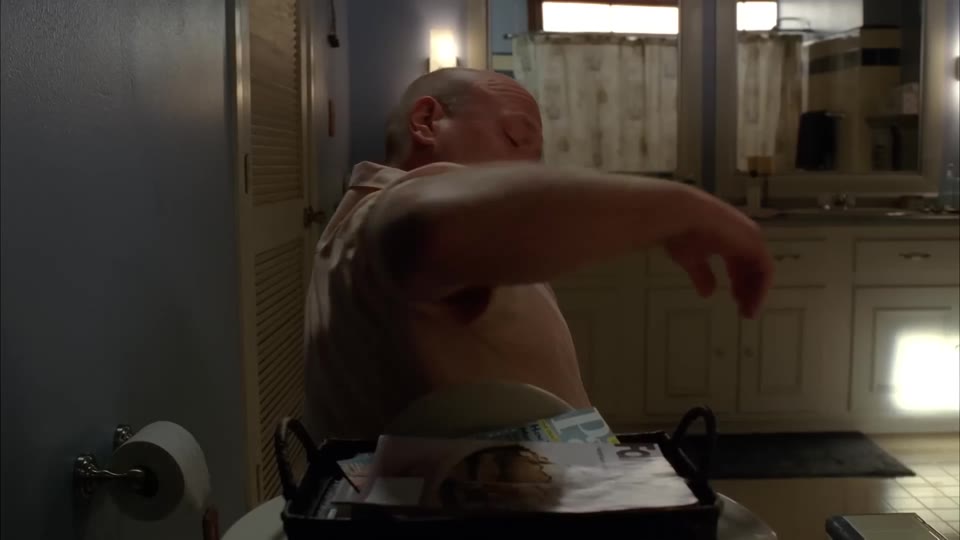
Picture 3 · Subject
the basket the book goes into
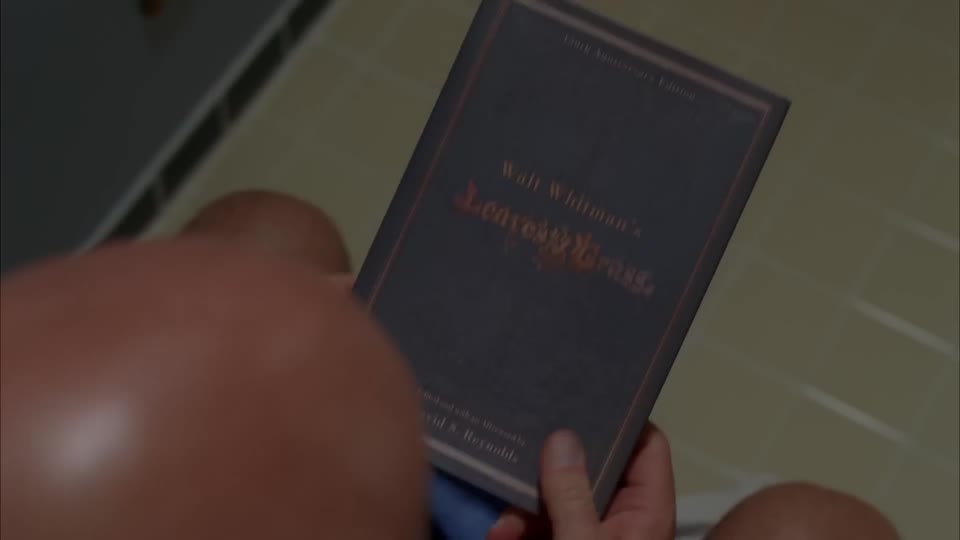
Picture 4 · Subject
the book
Video 1 · Edit source
the front view, 4:04.54 to 4:12, with its sound
Take 1 · Rejected
Pans to his face. The closing keyframe pulled the camera; the cut should be a cut.
Take 2 · Rejected
Wrong object. He keeps a magazine; in the show he keeps the book.
Take 3 · In the film
The smaller edit: opens on the show’s own cut, puts the book back, 7 s.
The prompt, as sent · shot 1
subject_definitions:
<Video 1> is the source video for the target video edit. It supplies the bathroom in a front three-quarter view, the man seated on the toilet, the blue-grey wall and the chrome toilet-paper holder at right, the wire towel rack above and behind him, the black wire basket on the toilet tank behind his left shoulder, the window light, the 35mm film grain, the color, the steady camera and the timing.
<Subject 1> is the man from <Video 1>, <Picture 1> and <Picture 2>: heavyset, bald, pale peach short-sleeved camp shirt, seated on the toilet, leaning slightly forward.
<Subject 2> is the small dark navy clothbound hardcover book from <Picture 1> and <Picture 4>, closed, held in both hands in his lap.
<Subject 3> is the black wire basket on the toilet tank behind the man's left shoulder from <Video 1> and <Picture 3>, holding a few glossy magazines.
<Subject 4> is the bathroom from <Video 1> and <Picture 5>: pale blue-grey wall, white tile, the wire rack with a folded dark towel, the toilet, the chrome paper holder with its roll.
<Picture 1> is the exact opening frame of the target video: the man seated in the front three-quarter view holding the closed book in both hands, eyes on it.
<Picture 2> shows the man in the same seat and framing with nothing in his hands, leaning forward, forearms on his thighs: the posture the target video ends on.
<Audio 1> is the attached audio signal captured with <Video 1>: the bathroom room tone with the man's breathing and the faint ventilation hum.

summary:
[video editing] + keyframe completion + audio reuse. The target video is an edited version of <Video 1>. A seven-second 16:9 shot that opens exactly on <Picture 1>: <Subject 1> holds <Subject 2>, the closed book, looks at its cover for a beat, does not open it, twists to his right and sets it into <Subject 3>, the basket on the tank behind him, then faces forward again and settles with his forearms on his thighs and nothing in his hands, ending on the posture of <Picture 2>. The bathroom, the framing, the lighting, the grain, the color and the steady camera of <Video 1> are preserved. <Audio 1> is reused unchanged.

retention_analysis:
<Video 1>: fully_preserved — the source framing, lighting, grain, color, pacing and camera behavior carry through; only what the man does with the book changes.
<Subject 1>: fully_preserved — identical man, wardrobe, seat and manner.
<Subject 2>: partially_preserved — the same book, but it stays closed and goes into the basket instead of being opened and read.
<Subject 3>: fully_preserved — the same basket in the same place; it receives the book.
<Subject 4>: fully_preserved — identical room, wall, rack, toilet and paper holder.
<Picture 1>: fully_preserved — the target video begins on this exact frame.
<Picture 2>: partially_preserved — the same posture and framing at the end, reached by the man's own movement.
<Audio 1>: fully_copy — the complete attached room tone is reused unchanged across the full seven seconds.

detailed_description:
Naturalistic live-action realism matching <Video 1> exactly: soft daylight from the window at left, muted domestic color, visible fine 35mm grain, a steady locked camera with no drift. The edit reads as the same take with the book put away instead of opened.

[Shot 1] The shot opens exactly on <Picture 1>: <Subject 1> seated on the toilet in <Subject 4>, front three-quarter view, the chrome paper holder at frame right, the wire rack above and behind his head, <Subject 3> the basket behind his left shoulder. He holds <Subject 2>, the closed book, in both hands in his lap and looks at the cover. His expression stays flat and uninterested. At about 00:01.500 he lowers the book slightly, keeps it closed, and at about 00:02.500 twists his upper body to his right, his right arm reaching back toward the tank, and sets the book down into <Subject 3> on top of the magazines, releasing it at about 00:04.000. He turns back to face forward, settles his weight, and rests his forearms on his thighs with his hands hanging empty between his knees by about 00:05.500, eyes down, bored and waiting. From 00:05.500 to 00:07.000 the frame holds on the posture of <Picture 2>. No visible titles, signs, labels or subtitles appear at any point. The requested change is confined to the book being set back into the basket unopened; the framing, background, lighting, grain, color, timing and camera of <Video 1> remain preserved.

overall_soundscape:
Reuse <Audio 1> unchanged as a fully_copy source across the entire seven seconds: the close room tone of a tiled bathroom, the man's slow breathing, faint ventilation hum, and the soft tap of the book settling into the wire basket sitting inside that signal. No dialogue.

non_diegetic_music:
N/A — no music, as explicitly requested.
Shot 2 · The exit, and the belt
The exit is the one shot the episode never shows from this angle, so it had to be invented, and the belt is where the workflow broke. In the plate his belt is open from twelve seconds on. Three takes, three prompts: the buckle defined as a state that closes by two and a half seconds, a crop of the fastened belt as a reference, the two loose ends named and told to disappear under the shirt. Every take came back with the ends still hanging. The model preserves what its edit source shows, and the source showed an open belt. Words did not override that, and I do not think a fourth wording would have. Gemini Omni Flash, which takes a frame and references in one request, refused the shot outright for a real person’s likeness, so fal’s H3 Max was the only route.
So I stopped prompting. The plate’s unbuckle, played backwards, is a buckle: the hands come together and the belt closes. The seat lift just before it, reversed, is the seat being lowered. One doubled hand movement had to be cut. Then a new shot, chained off the reversed clip’s last frame, for the part that does need generating: he turns, walks to the door, steps through and closes it. The plate’s own walk through that door went in as the motion reference, in the direction I wanted this time, and it came back right on the first take.
What that take got wrong was sound. The door close landed a third of a second after the door met the jamb, and the door opening was the loudest thing in the clip. In the edit the close moved onto the frame, the open came down, and a clack was placed where he lowers the seat. One thing I had not expected: measured against the plate on the same crop, the generated frame was sharper and cleaner than the real one, not softer. It was pulled down to match, a light blur, grain at the plate’s level, a small lift.
Left, the plate. He unbuckles. Right, the same four and a half seconds reversed. He buckles. No render.
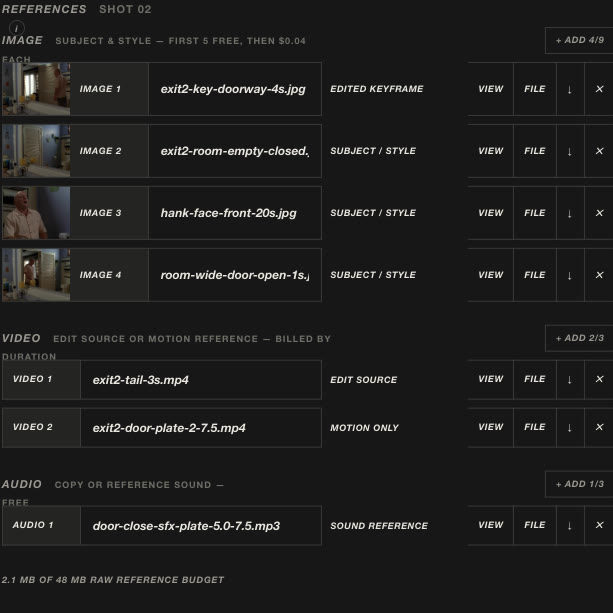
Left, the continuation as sent: Video 1 is the last three seconds of the reversed clip, the edit source, so the shot opens on its final frame; Video 2 is motion only. Right, that motion reference: the plate’s own walk through the door, in the direction the shot needed.
Take 1 · Rejected
Belt still open. Door slams, and the sound is late.
Take 2 · Rejected
Belt still open. The toilet seat closes by itself at four seconds.
Take 3 · Rejected
Belt still open. Seat stays up. Three prompts, same buckle.
Take 4 · In the film
Chained off the reversed clip. Turns, walks, closes the door. Sound re-timed in the edit.

The join, at twice size. Left, the last real frame. Middle, the first generated frame as it came back: sharper, no grain, a shade darker. Right, after matching.
The prompt, as sent · shot 2, the continuation
subject_definitions:
<Video 1> is the source video for the target video edit: the last three seconds before the target, the man beside the toilet in a locked-off wide bathroom, seat just lowered, his body turning away from the toilet. It supplies the room, the framing, the light, the 35mm grain, the color, the camera and the man's position at the start.
<Video 2> is a motion reference: the same man in the same room walking through the louvered door and closing it behind him. It supplies his gait, the door's swing and the pace of the close.
<Subject 1> is the man from <Video 1>, <Video 2> and <Picture 3>: heavyset, bald, pale peach short-sleeved camp shirt, grey-brown trousers, belt fastened, unhurried.
<Subject 2> is the bathroom from <Video 1> and <Picture 4>: vanity in the foreground, long mirror at left, white louvered door with a brass knob in the centre, window high at right, the toilet at lower right with its seat down.
<Picture 1> is the concrete keyframe near the end: the man in the open doorway with his back to the camera, right hand on the door edge, the bedroom visible beyond him.
<Picture 2> is the final state: the same room empty, the louvered door closed, the toilet seat down.
<Audio 1> is the sound of this bathroom's louvered door closing, recorded in the same room: a soft wooden contact and a small latch click; the reference for the door's sound.

summary:
[video editing] + keyframe completion + audio reference. The target video is an edited version of <Video 1>. A seven-second 16:9 locked-off wide that continues directly from the end of <Video 1>: <Subject 1> turns left away from the toilet until he faces the door, walks unhurriedly straight to it with the gait of <Video 2>, facing it the whole way, opens it, steps through on the composition of <Picture 1>, and draws it closed behind him at the easy pace of <Video 2>, leaving <Subject 2> as in <Picture 2> for the final beat. Room, framing, light, grain, color and camera of <Video 1> are preserved.

retention_analysis:
<Video 1>: fully_preserved — framing, lens, light, grain, color, locked-off camera and the man's starting position carry through; the target continues its last frame.
<Video 2>: weak_reference — only the walk, the door swing and the pace of the close are borrowed.
<Subject 1>: fully_preserved — identical man and wardrobe; he walks out.
<Subject 2>: fully_preserved — identical room; the toilet seat stays down and nothing else moves.
<Picture 1>: fully_preserved — the doorway composition is reached exactly at the specified moment.
<Picture 2>: fully_preserved — the final second matches it.
<Audio 1>: reference — the door's soft contact and latch click are matched at the moment the door meets its frame.

detailed_description:
Naturalistic realism matching <Video 1> exactly: warm sconce and cool window light, muted color, fine 35mm grain, a locked-off wide camera with no pan, tilt, zoom or reframing for all seven seconds.

[Shot 1] The shot opens on the exact last frame of <Video 1>: <Subject 1> beside the toilet, body turned three-quarters away from camera, the seat down. He turns to his left, a full half turn away from the toilet, until he faces the louvered door across the room at frame left, and from about 00:00.800 walks unhurriedly straight toward it, four easy steps, facing the door the whole way with his back to the toilet, his reflection crossing the long mirror. At about 00:03.000 he reaches the door, takes the brass knob and pulls it open toward himself, revealing the bedroom beyond. At 00:04.200 the composition matches <Picture 1> exactly: the man in the open doorway with his back to camera, his right hand on the edge of the door. He steps through and draws the door closed behind him at an easy, unhurried pace, and it settles against the frame with a soft contact and small latch click like <Audio 1> at about 00:05.500, no slam. From 00:05.500 to 00:07.000 the room holds still exactly as <Picture 2>: the closed louvered door, the toilet seat down, the same light and grain. Only the man's movement changes; the framing, fixtures, lighting, grain, color and camera of <Video 1> remain preserved.

overall_soundscape:
Generated on the picture's own timeline: tiled-bathroom room tone with a faint fan hum throughout; four unhurried footsteps on tile from 00:00.800; the brass knob turning at 00:03.000; the door swinging open on its hinges; the door meeting its frame at exactly 00:05.500 sounding like <Audio 1>, a soft wooden contact and a small latch click, low in level, no slam; then room tone alone. No dialogue.

non_diegetic_music:
N/A — no music.
Shot 3 · Back to the table
The return is not in the episode either. The first take had him walking away into the house, the opposite of the prompt, because the source clip I gave the model was the plate of him leaving, and the model reproduced the motion its source showed. The fix was not a better prompt. I cut the source to the stretch after he has gone, where the family sits and nobody walks, so there was no motion to copy, and gave the walk as its own reference: Walt Jr. walking in from the house along the pool, from earlier in the same scene, in the same framing. Take 2 came back in the right direction.
I also shortened it, from an eight-second shot that ended with him sitting down to five seconds of him walking in. Cheaper, and enough for the cut. Two more takes tried to fix a half-step he makes in the doorway. One attached his own walk to the house as a reference “to be run in reverse”, which the model ran forward. One used words alone, and had him stop and stand behind Skyler. Take 2, trimmed past the doorway, is in the film.
Left, the source that misled take 1: the plate of Hank leaving. Right, the reference that fixed it: Walt Jr. walking in, a minute earlier in the same scene.
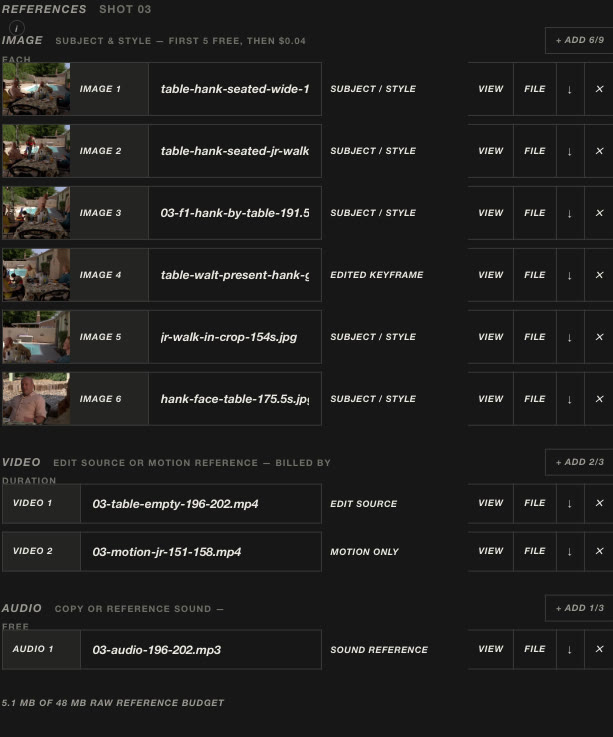
Left, shot 3 as sent, the version that became take 2. Right, its edit source: the table after he has gone in. Nobody walks in it, so there is no motion for the model to copy, and the walk comes only from Video 2.
Take 1 · Rejected
Walks into the house. The source showed him leaving, so the model had him leave.
Take 2 · In the film
Out of the door and along the pool. Source cut to a still table, the walk as its own reference.
Take 3 · Rejected
His own walk out, attached “in reverse”, was copied forward. Walks away again.
Take 4 · Rejected
Words only. Comes out, then stops and stands.
The prompt, as sent · shot 3, take 2
subject_definitions:
<Video 1> is the source video for the target video edit. It supplies the patio in a locked-off wide shot: the long table under the pergola in the foreground, the woman in yellow at left, the boy beside her, the blonde woman in blue at right, the older man in a tan shirt and glasses seated at the far side of the table with a baby, the empty black metal chair at the far right corner, the pool and the stucco house beyond, the sliding door into the house at the far right, the afternoon sunlight, the 35mm film grain, the color and the camera. Nobody walks anywhere in <Video 1>; the family sits and talks.
<Video 2> is a motion reference: the same patio wide with a young man in a red shirt walking in from the house side, along the pool, toward the table. It supplies only the path, pace and scale of a person arriving from the house to the table in this framing.
<Subject 1> is the bald man from <Picture 1>, <Picture 2>, <Picture 3> and <Picture 6>: heavyset, pale peach short-sleeved camp shirt, grey-brown trousers, unhurried walk. He is NOT in <Video 1>; he enters the target video from the sliding door.
<Subject 2> is the patio and the seated family from <Video 1> and <Picture 4>: the woman in yellow, the boy, the woman in blue, the older man in the tan shirt with the baby, the table with its fruit-print cloth, bottles, glasses and plates, the pool, the house, the pergola shadow across the foreground. All of them stay exactly as they are in <Video 1>.
<Subject 3> is the empty black metal chair at the far right corner of the table from <Video 1> and <Picture 4>, beside the woman in blue: the bald man's own seat, shown occupied by him in <Picture 1> and <Picture 2>. It stays empty for the whole target video.
<Picture 4> is the exact opening frame of the target video: the table with the family seated, the older man in the tan shirt on the far side, the far right chair empty, nobody by the pool or at the sliding door.
<Picture 5> shows the young man from <Video 2> mid-walk along the pool, for the scale and position of a person on that path.
<Audio 1> is the attached audio signal captured with <Video 1>: outdoor afternoon ambience, birds, the pool filter, cutlery and glass on the table, low conversation; a sound reference, not a track to be copied.

summary:
[video editing] + keyframe completion + audio reference. The target video is an edited version of <Video 1>. A five-second 16:9 locked-off wide that opens exactly on <Picture 4>. Everything in <Video 1> is preserved: the seated family, the older man in the tan shirt, the table, the pool, the light. The single addition is <Subject 1>, the bald man, who comes OUT of the sliding door at the far right, slides it shut, and walks along the near edge of the pool toward the table, on the path and at the pace of <Video 2>, approaching his empty chair <Subject 3>. The shot ends while he is still walking, a few steps short of the chair. He moves from the house toward the table and never in the other direction. The sounds are generated on the picture's own timeline, guided by <Audio 1>.

retention_analysis:
<Video 1>: fully_preserved — the source framing, lens, sunlight, grain, color, locked-off camera and every seated person carry through unchanged; the bald man is added on top.
<Video 2>: weak_reference — only the path and pace of a walk from the house to the table are borrowed; the young man in red does not appear.
<Subject 1>: attribute_transfer — the bald man's identity and wardrobe come from the pictures; his walk in is new.
<Subject 2>: fully_preserved — identical patio, table, seated family including the older man in the tan shirt, pool and house.
<Subject 3>: fully_preserved — the same chair, empty throughout.
<Picture 4>: fully_preserved — the target video begins on this exact frame.
<Picture 5>: weak_reference — scale and placement of a walker on the pool path only.
<Audio 1>: reference — ambience, table sounds and voices are matched in character; the door and footsteps follow the new picture.

detailed_description:
Naturalistic live-action realism matching <Video 1> exactly: hard afternoon sunlight with the pergola's shadow across the foreground, warm stucco and blue pool water, muted broadcast color, fine 35mm grain, a locked-off wide camera with no pan, tilt, zoom or reframing for the entire five seconds.

[Shot 1] The shot opens exactly on <Picture 4>: the table in the foreground, the woman in yellow at left with the boy, the woman in blue at right, the older man in the tan shirt on the far side with the baby, <Subject 3> empty at the far right corner, the pool bright beyond, the sliding door closed at the far right edge. The family is mid-meal, as in <Video 1>. At about 00:00.600 the sliding door at the far right opens and <Subject 1>, the bald man, steps out of the house onto the patio, facing toward the camera and the table, and slides the door shut behind him. From 00:01.300 to 00:05.000 he walks toward the table along the near edge of the pool, on the path and at the unhurried pace of <Video 2>, coming closer to the camera with every step, one hand brushing his shirt front. The woman in blue glances back toward him. The shot ends at 00:05.000 with him still walking, two or three steps from <Subject 3>, his empty chair. No visible text appears at any point. The only change is the bald man arriving from the house; the framing, background, seated family, sunlight, grain, color and camera of <Video 1> remain preserved.

overall_soundscape:
Generated on the picture's own timeline, with <Audio 1> as a reference for the character of every sound: open-air afternoon ambience with birds and the soft churn of the pool filter throughout; the sliding door rolling open and shut at about 00:00.600; unhurried footsteps on concrete from 00:01.300 to 00:05.000 growing nearer; cutlery, glass and low indistinct conversation from the table under it all. Every sound lands on its action. No dialogue with words.

non_diegetic_music:
N/A — no music, as explicitly requested.
The cut, and the numbers
The assembly is one encode: the broadcast footage to the insert, the book, the reversed buckle and seat, the generated exit, the table. Stream-copying the pieces together stalled at every join, so the whole thing is re-encoded once. Three sounds were fixed by hand: the footsteps at the top of the reversed clip, replaced with the clip’s own room tone; the plate’s thump as he lifts the stack, which is real but no longer belongs; and the seat clack, cut from where the model put it and laid on the frame the seat lands.
The next things to try are the ones this piece exposed. A generated keyframe for an action the plate never shows, so a belt can close without a trick. A way to hand the model a still frame and references in one request, which Omni allows and H3 does not. And a provider check before building a shot, since the likeness rule is enforced at the input on one and not at all on another.